Beautiful Flowers in the Basket: A Designer’s Review
First Impressions: Redwork Charm and Structural Versatility
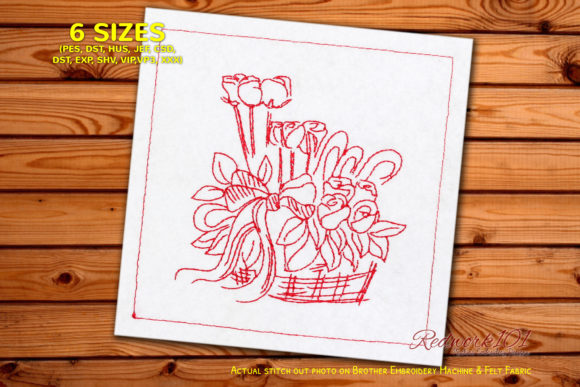
When evaluating a new machine embroidery design for potential inclusion in a commercial catalog or a custom client project, my first criterion is always versatility. Does this design have a distinct personality while remaining adaptable? Beautiful Flowers in the Basket immediately passes this test through its classic redwork aesthetic. Redwork has seen a massive resurgence in the handmade community because it offers a vintage, nostalgic feel that translates beautifully to modern goods. The motif itself—a lush arrangement of florals contained within a basket structure—provides a natural focal point that feels complete without requiring excessive additional elements.
What stands out during the initial digital review is the optional nature of the Box Stitch border. For an Etsy seller or small shop product creator, this modularity is gold. It allows you to sell or create two distinct looks from a single embroidery file. With the box, the design feels structured, framed, and ready for items like pillow covers or wall hangings. Without it, the organic shape of the basket becomes softer, making it ideal for apparel placement where rigid borders can sometimes look out of place. This flexibility suggests the digitizer understood that end-users need options for different fabric texture types and project scales.
Real-World Application: Stitching a Custom Birthday Tote
To truly judge the performance of Beautiful Flowers in the Basket, I recently tested it on a mid-weight canvas tote bag intended as a personalized birthday gift. Totes are a staple for craft business owners and apparel decorators, but they present specific challenges regarding stability and visual weight. My goal was to see if the redwork style maintained its delicate charm on a utilitarian item without looking sparse or getting lost in the canvas weave.
The stitching process revealed several practical strengths. Because redwork typically relies on running stitch and lighter density lines rather than heavy satin stitch or dense fill stitch areas, the design did not distort the canvas. Heavy designs often cause tunneling or puckering on tote bags, but this floral basket sat flat and crisp. I opted to include the outer box stitch in a contrasting charcoal grey to anchor the red florals against the natural canvas. This color blocking technique elevated the perceived value of the finished product, transforming a simple bag into a boutique-quality accessory. For those creating birthday merchandise, this design strikes the right balance between celebratory and sophisticated, avoiding the juvenile look that some floral designs can accidentally convey.
Fabric Compatibility and Placement Strategy
While Beautiful Flowers in the Basket performed exceptionally well on canvas, designers must be strategic about fabric selection. The linear nature of redwork means that high-pile or heavily textured fabrics can swallow the detail. If you are planning sweatshirt embroidery on fleece or French terry, you must use a water-soluble topping to keep the stitches visible. Without it, the intricate floral details may sink into the nap, reducing the visual impact and clarity of the handmade product.
Conversely, this design is an excellent candidate for baby embroidery on cotton interlock or broadcloth. The lower stitch density makes it softer to the touch, which is non-negotiable for infant garments. However, caution is advised for stretchy knits. Because the basket structure relies on geometric integrity, stretching the fabric during hooping can result in a distorted image once unhooped. Always use appropriate stabilizer and consider a cut-away backing for any stretch application to maintain the shape of the basket and the optional box frame.
For commercial embroidery projects involving caps or curved surfaces, I would recommend removing the box stitch element entirely. Curved brims and structured caps do not accommodate square frames well; the distortion at the corners is difficult to correct. The standalone basket, however, centers beautifully on a cap front or pocket area, making it a viable option for spring and summer retail lines.
Technical Considerations for Professional Results
Before listing this design in your shop or committing to a bulk production run, adhere to these professional best practices:
- Verify Hoop Size and Margins: Ensure your machine’s hoop provides adequate clearance around the optional box stitch. Tight margins can lead to flagging or misalignment.
- Thread Color Contrast Testing: Redwork traditionally uses red thread, but modern applications benefit from experimentation. Test the design in black, navy, and variegated threads. On dark fabrics, ensure the thread weight is sufficient to provide coverage without increasing density.
- Stitch Density Check: Review the digital embroidery file properties. If adapting for sheer fabrics like linen or voile, you may need to reduce density slightly to prevent tearing. For denim, verify the needle size matches the thread weight to avoid skipped stitches.
- Mockup Validation: Create a printable mockup or digital preview showing both versions (with and without the box). Customers often struggle to visualize optional elements; providing clear visuals reduces support inquiries and returns.
- Licensing Confirmation: Before selling finished items or the file itself, confirm the specific license terms. Commercial rights vary by digitizer, and protecting your business starts with compliance.
Enhancing Product Value and Customer Trust
In the competitive landscape of digital product sellers and creative entrepreneurs, presentation dictates price. Beautiful Flowers in the Basket offers a unique opportunity to demonstrate professionalism through customization. By showcasing the design on multiple substrates—a tea towel for the kitchen niche, a nursery pillow for the baby market, and a tote for the eco-conscious shopper—you signal to buyers that this is a versatile asset worth investing in.
Furthermore, the clean lines and traditional styling of this embroidery project build trust. Buyers are wary of designs that look overly complex or messy in photos. The inherent simplicity of redwork, when executed correctly, photographs beautifully even in low-light settings typical of home studios. This visual clarity translates directly to higher engagement on social media and marketplace listings. When a customer sees a crisp, well-stitched sample, they assume the applique design or stitch file is equally high quality.
Final Verdict for Makers and Sellers
Beautiful Flowers in the Basket is more than just a pretty floral motif; it is a functional tool for makers who need reliable, attractive designs that perform across various mediums. Its strength lies in its duality—the ability to be both a framed centerpiece and a freestanding accent. Whether you are fulfilling custom orders for holiday embroidery gifts, stocking your own boutique, or expanding your digital library, this design warrants a spot in your collection.
However, success depends on execution. Treat it with the respect due to redwork: prioritize stabilization, mind your fabric textures, and leverage the optional box stitch strategically rather than defaulting to it every time. By applying these professional insights, you transform a standard embroidered patch or garment decoration into a signature piece that reflects the quality of your brand. Always test first, document your settings, and let the timeless appeal of flowers in a basket speak to the enduring love of handcrafted goods.